An Opening Quote: 方丈記 - commentary by Milena A. Guziak
- Shinrin-Yoku Magazine
- August 10, 2026
- Milena A. Guziak
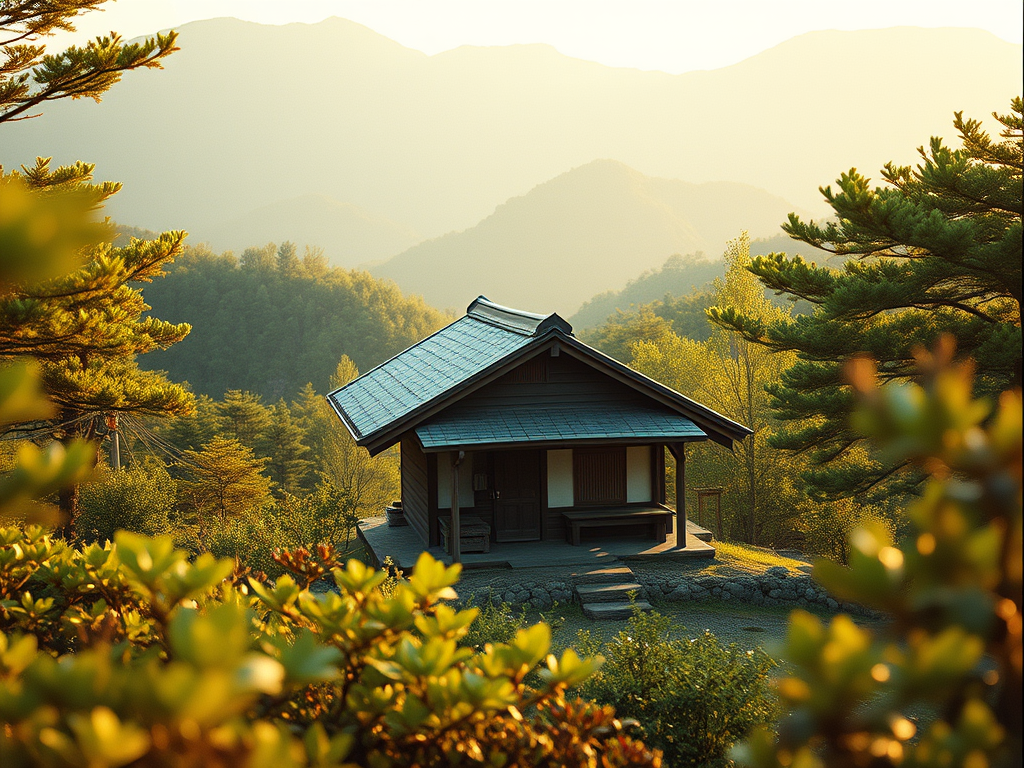
Hōjōki (方丈記), often translated as An Account of My Hut or The Ten-Foot-Square Hut, is a classic Japanese text written in the early thirteenth century by Kamo no Chōmei (鴨長明, 1155–1216), a poet, musician, and Buddhist recluse. In the work, Chōmei reflects on the impermanence of life, drawing on his experiences of natural disasters, social upheaval, and personal disappointment. The small hut in which he chooses to live becomes a symbol of simplicity, detachment, and freedom from excessive attachment to possessions and status. At the heart of Hōjōki is the Buddhist idea of mujō (無常)—the understanding that everything is constantly changing and nothing remains permanent. Through observing both human society and the natural world, Chōmei suggests that suffering often arises when we try to hold on to things that inevitably change, while greater peace may be found in accepting impermanence and living more simply and attentively.
十 草庵の生活(一)
ひとり調べ、ひとり詠じて
もし、念仏もの憂く、読経まめならぬ時は、みづから休み、みづからおこたる。さまたぐる人もなく、また、恥づべき人もなし。ことさらに無言をせざれども、独りをれば、口業を修めつべし。必ず、禁戒を守るとしもなくとも、境界なければ、何につけてか破らん。
もし、跡の白波に、この身をよする朝には、岡の屋に行きかふ船をながめて、満沙弥が風情をぬすみ、もし、桂の風、葉を鳴らす夕には、潯陽の江を思ひやりて、源都督の行ひをならふ。もし、余興あれば、しばしば松の響に秋風楽をたぐへ、水の音に流泉の曲をあやつる。芸はこれつたなけれども、人の耳をよろこばしめむとにはあらず。ひとり調べ、ひとり詠じて、みづから情をやしなふばかりなり
10. Life in the Grass Hut (I)
Playing and Reciting Alone
When I feel too weary to recite the nembutsu, or when I lack the concentration to read the sutras properly, I simply rest when I wish and allow myself to be idle. There is no one here to interrupt me, and no one before whom I need feel ashamed. I do not deliberately undertake the discipline of silence, yet because I live alone, I naturally avoid the wrongdoing that can arise through speech. Nor do I make a particular display of strictly observing the Buddhist precepts; when there are no circumstances that tempt me to break them, by what means could I violate them?
On mornings when the white wake left behind by a passing boat reminds me of the fleeting nature of my own life, I watch the boats travelling near Okanoya and borrow the sentiment of the poet Mansei. On evenings when the wind blows through the katsura trees and rustles their leaves, my thoughts travel to the river at Xunyang in China, and I imitate the example of Minamoto no Tsunenobu.
When the mood takes me, I sometimes accompany the sound of the wind in the pines with the melody of Shūfūraku (“Music of the Autumn Wind”), or play the piece Ryūsen (“Flowing Spring”) to the sound of running water. My skill is poor, but I do not play in order to delight the ears of others. I play alone and recite poetry alone, simply to nourish my own heart and spirit.
Notes
無言 (mugon) — literally “silence”; here it refers to the Buddhist practice of deliberately remaining silent for a certain period of time.
口業 (kugō) — one of the Buddhist “actions” or forms of karma created through speech. In this context, Chōmei suggests that solitude naturally prevents harmful or unnecessary speech.
岡の屋 (Okanoya) — an area in present-day Uji, Kyoto Prefecture, near the former Ogura Pond, which was once an important harbour.
満沙弥 / 沙弥満誓 (Mansei) — a poet and Buddhist monk of the seventh–eighth centuries. Chōmei alludes to his famous poem:
世の中を何にたとへん
朝ぼらけ
漕ぎ行く舟の
跡の白波
“What can this world be compared to?
At dawn, the white waves
left behind a boat
rowing away.”
The disappearing wake of the boat became an image of impermanence (無常, mujō).
潯陽の江 (Xunyang River) — a name associated with a section of the Yangtze River near present-day Jiujiang in Jiangxi Province, China.
源都督 (Minamoto no Tsunenobu, 1016–1097) — a Heian-period poet and musician, famous particularly for his skill with the biwa.
秋風楽 (Shūfūraku) — a piece of traditional Japanese court music (gagaku), its name meaning approximately “Music of the Autumn Wind.”
流泉 (Ryūsen) — a classical biwa composition, literally “Flowing Spring,” traditionally regarded as one of the three secret masterpieces of the biwa.
Commentary: Hōjōki and Transformative Experience
This passage from Hōjōki is particularly relevant to the first issue of the magazine, devoted to transformative experiences, because Chōmei describes transformation not as a dramatic event, but as a gradual change in the way one relates to oneself, to society, and to the natural world.
His retreat to the small hut creates a different condition of living. Removed from social expectations, obligations, comparison, and performance, he begins to encounter life more directly. He rests when he needs to rest. He prays when prayer arises naturally. He listens to wind, water, and leaves without needing to turn those experiences into something productive or impressive. In this sense, the hut becomes more than a physical shelter… it becomes a space in which another way of being becomes possible.
This is important when thinking about transformative experience. Transformation does not always mean becoming someone new. Sometimes it means allowing unnecessary layers to fall away so that a different relationship with life can emerge. In Chōmei’s case, solitude reduces external noise and makes room for attentiveness. The ordinary world becomes more vivid: the wake of a passing boat evokes impermanence, the wind in the trees recalls poetry and music, and the sound of water becomes part of an intimate dialogue between nature and the inner life.
The passage also shows that transformative experiences often arise through attention rather than intensity. Nothing extraordinary needs to happen. Chōmei does not describe a revelation produced by spectacle. Instead, transformation develops through repeated encounters with simple phenomena: sound, movement, silence, memory, weather, music, and the changing landscape.
The final line captures this beautifully:
ひとり調べ、ひとり詠じて、みづから情をやしなふばかりなり。
“I play alone and recite alone, simply to nourish my own heart and spirit.”
Here, music and poetry are not performances for others. They are ways of tending the inner world. The natural environment becomes part of this process of cultivation. Wind, pine trees, flowing water, memory, art, and contemplation are no longer separate experiences; they begin to participate in one another.
For an issue exploring transformative experiences, Hōjōki therefore offers an important perspective: transformation may begin when our habitual relationship with the world is interrupted. By stepping outside familiar patterns of striving, social performance, and constant activity, we may become more receptive to what is already present.
Chōmei’s experience also reminds us that the natural world does not necessarily “transform” us by delivering a particular outcome. Rather, it can create conditions in which perception changes. We may notice differently, listen differently, and understand ourselves differently. The transformation lies partly in this shift of relationship.
Perhaps this is why a text written more than eight centuries ago still feels remarkably contemporary. In a culture often shaped by speed, stimulation, visibility, and productivity, Chōmei proposes something else withdraw for a moment, listen carefully, allow simplicity to work on you, and notice what begins to change.
-
An Opening Quote: 方丈記 - commentary by Milena A. Guziak
-
Shinrin-Yoku Magazine - Issue 1 - Disclaimer
-
Spending Time in the Forest: Modalities of Engagement, Connection, and Care
-
Why We Need Forest Therapy Guides
-
The Shinrin Yoku Association: Honoring Tradition, Science, and the Future
-
From Shinrin-Yoku (Forest Bathing) to Forest Therapy: The Evolution of a Japanese Health Concept
-
Comprehensive Assessment and Optimization of Invitations for Shinrin-Yoku Sessions: Methodology and Case Study
-
Establishing Ethical Standards and Best Practices for Shinrin Yoku Guides: A Comprehensive Guide by the Shinrin Yoku Association
-
Investigating Relationships between Nature Connection, Emotion Regulation, and Mindful Attention Awareness
-
The Relationship Between Nature Connection Index and Difficulties in Emotion Regulation Scale. Results Digest
From Shinrin-Yoku Magazine
An Opening Quote: 方丈記 – commentary by Milena A. Guziak
This passage from Hōjōki is particularly relevant to the first...
Read MoreShinrin-Yoku Magazine – Issue 1 – Disclaimer
The articles of the magazine are intended for informational and...
Read MoreFrom Shinrin-Yoku Journal
Spending Time in the Forest: Modalities of Engagement, Connection, and Care
This chapter continues and expands the discussion initiated in Guziak’s...
Read MoreWhy We Need Forest Therapy Guides
The need for forest therapy guides may be understood through...
Read MoreThe Shinrin Yoku Association: Honoring Tradition, Science, and the Future
The Shinrin Yoku Association: Honoring Tradition, Science, and the Future
Read MoreFrom Shinrin-Yoku (Forest Bathing) to Forest Therapy: The Evolution of a Japanese Health Concept
From Shinrin-Yoku (Forest Bathing) to Forest Therapy: The Evolution of...
Read MoreComprehensive Assessment and Optimization of Invitations for Shinrin-Yoku Sessions: Methodology and Case Study
Comprehensive Assessment and Optimization of Invitations for Shinrin-Yoku Sessions: Methodology...
Read MoreEstablishing Ethical Standards and Best Practices for Shinrin Yoku Guides: A Comprehensive Guide by the Shinrin Yoku Association
Establishing Ethical Standards and Best Practices for Shinrin Yoku Guides:...
Read MoreInvestigating Relationships between Nature Connection, Emotion Regulation, and Mindful Attention Awareness
Investigating Relationships between Nature Connection, Emotion Regulation, and Mindful Attention...
Read MoreThe Relationship Between Nature Connection Index and Difficulties in Emotion Regulation Scale. Results Digest
The Relationship Between Nature Connection Index and Difficulties in Emotion...
Read MoreResearch Digest: Medical Empirical Research on Forest Bathing (Shinrin-Yoku)
Research Digest: Medical Empirical Research on Forest Bathing (Shinrin-Yoku) ISBN:...
Read MoreSelected Facts from the History of Research on Phytoncides and Phytoncide Therapy
The Shinrin Yoku Association: Honoring Tradition, Science, and the Future
Read MoreModalities of Spending Time in the Forest
The Shinrin Yoku Association: Honoring Tradition, Science, and the Future
Read MorePhytoncides and Forest Volatile Organic Compounds: Ecological Foundations, Chemical Diversity, and Relevance for Forest Therapy
The Shinrin Yoku Association: Honoring Tradition, Science, and the Future
Read MoreProfessional Identity, Agency, and Ethical Responsibility of Forest Therapy Guides
This article explores scaffolding as a guiding principle in forest...
Read MoreScaffolded Model of Engagement for Facilitating Guided Forest Therapy Sessions
This article explores scaffolding as a guiding principle in forest...
Read MoreDesigning Invitations for Guided Forest Therapy Sessions: Structure, Sensory Modalities, and Intentionality
This article explores scaffolding as a guiding principle in forest...
Read MoreNature and Human Well-Being: Theoretical Perspectives and Implications for Forest Therapy
A growing body of research suggests that contact with natural...
Read MorePhysiological Markers of Wellbeing in the Context of Exposure to Forest Atmosphere
Understanding the effects of exposure to forest environments requires attention...
Read MoreThe Sense of Smell, Nervous System, and Forest Phytoncides: A Circle of Influence
This chapter continues and expands the discussion initiated in Guziak’s...
Read MoreSubscribe Now
Since ©2022. Shinrin Yoku Association. All Rights Reserved.