15. Implications for Research
The preceding analysis suggests that the scientific investigation of Shinrin-Yoku and forest therapy would benefit from a more conceptually differentiated and methodologically integrated research agenda. Over recent decades, empirical studies have contributed to an expanding body of evidence concerning the physiological, psychological, and behavioural responses associated with exposure to natural environments. Investigations have examined stress-related biomarkers, autonomic nervous system activity, emotional states, cognitive functioning, perceived restoration, and nature connectedness. Although systematic reviews and meta-analyses have identified potentially beneficial outcomes, they have also highlighted substantial heterogeneity in intervention characteristics, methodological limitations, and uncertainty concerning the mechanisms underlying observed effects (Hartig et al., 2014; Coventry et al., 2021).
The continued accumulation of evidence demonstrating favourable responses following forest exposure does not, however, fully resolve the more fundamental question of how these responses arise. Forest-based interventions commonly incorporate multiple interacting components, including environmental exposure, physical movement, sensory attention, professional facilitation, social interaction, and opportunities for contemplation. When these elements occur simultaneously, determining their respective contributions becomes methodologically challenging. This difficulty is compounded when forest therapy is conceptualised as a relatively homogeneous intervention despite considerable variation in programme structure, ecological setting, participant characteristics, and intended outcomes.
A more advanced research agenda should therefore move beyond the general question of whether forest therapy produces beneficial outcomes and investigate which forms of forest engagement contribute to particular outcomes, through which processes, for whom, under what environmental and social conditions, and over what periods of time. Such an approach does not diminish the significance of existing intervention research. Rather, it seeks to strengthen the explanatory value, interpretability, and applicability of future findings.
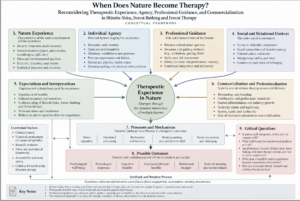
The relational framework introduced in Section 14, organised around the interacting dimensions of person, place, process, and time, offers one conceptual basis for developing this research agenda. The framework builds upon earlier work concerning modalities of forest engagement and the horizontal and vertical dimensions of nature contact (Guziak, 2026a). It should nevertheless be understood as a heuristic framework rather than an empirically validated causal model. Its purpose is to organise potentially relevant variables, identify relationships that warrant investigation, and support the development of testable hypotheses.
A central implication is that therapeutic intention, subjective therapeutic experience, and demonstrated health-related effects must remain analytically distinguishable. An intervention may be designed to encourage psychological restoration without producing measurable improvement in every participant. A person may experience a forest encounter as meaningful without demonstrating clinical change. Conversely, physiological responses may occur during environmental exposure independently of deliberate attention or professional facilitation. Recognising these distinctions is essential for developing scientifically defensible claims and for avoiding the assumption that every positively experienced encounter necessarily constitutes an effective therapeutic intervention.
15.1. From Demonstrating Benefits to Explaining Conditions and Mechanisms
One of the principal methodological challenges in contemporary forest therapy research concerns the distinction between documenting beneficial outcomes and identifying the processes through which those outcomes arise. A study reporting reduced perceived stress following forest exposure demonstrates an association between a particular experience and a measured outcome under specified conditions. It does not necessarily establish whether that response resulted from vegetation, environmental acoustics, physical movement, reduced exposure to urban stressors, attentional engagement, participant expectations, or interactions among these factors.
Hartig et al. (2014) identified multiple pathways through which nature contact may influence health, including psychological restoration, physical activity, environmental conditions, and social interaction. Their analysis illustrates the limitations of attributing the effects of natural environments to a single explanatory mechanism. Professionally facilitated forest experiences may introduce additional processes, such as structured sensory exploration, reflective practices, interpersonal engagement, and deliberate adjustments to the pace or character of an activity. These components may operate independently, interact with one another, or influence outcomes differently according to participant characteristics and environmental conditions.
The updated Medical Research Council framework for developing and evaluating complex interventions provides a relevant methodological foundation for examining these relationships. Skivington et al. (2021) emphasised the importance of programme theory, contextual influences, stakeholder perspectives, implementation processes, and the interactions between intervention components. This perspective is particularly applicable to Shinrin-Yoku because programmes operating under the same professional designation may differ substantially in their activities and assumptions about therapeutic change.
Future investigations should develop explicit programme theories identifying the outcomes that particular intervention components are hypothesised to influence and the processes through which those effects are expected to occur. For example, a sensory invitation might be proposed to influence attentional engagement, a reflective activity might support meaning-making, and a group-sharing component might influence perceived social connection. These propositions should be treated as hypotheses requiring empirical investigation rather than as established explanations.
Importantly, measuring an intermediate variable does not, by itself, demonstrate a causal mechanism. Claims about mediation require research designs, temporal information, and analytical assumptions appropriate to causal inference. Advancing the field therefore depends not only on expanding the range of measured outcomes but also on developing research designs capable of distinguishing intervention components, hypothesised mechanisms, contextual influences, and observed effects.
15.2. The Need for More Precise Intervention Descriptions
Improving the conceptual and operational description of interventions represents an immediate priority. Research publications frequently employ overlapping terminology, including Shinrin-Yoku, forest bathing, forest therapy, nature therapy, and nature-based interventions. Although these terms may refer to closely related practices, their use does not guarantee that the activities delivered are equivalent.
Consistent with the terminological discussion developed earlier in this article, Shinrin-Yoku and forest therapy are not treated here as necessarily separate experiential or therapeutic phenomena. Nevertheless, the ways in which researchers and professional organisations operationalise these designations may differ. Consequently, intervention descriptions should establish what participants actually experienced rather than relying on terminology alone.
The Template for Intervention Description and Replication (TIDieR), developed by Hoffmann et al. (2014), provides an established foundation for improving intervention reporting. Its recommendations address intervention rationale, materials, procedures, provider characteristics, modes of delivery, location, frequency, tailoring, modifications, and implementation fidelity. Although developed for a broader range of interventions, the framework offers a useful starting point for research involving forest-based practices.
For Shinrin-Yoku, reporting requirements should additionally consider ecological and experiential characteristics. Relevant information may include vegetation and landscape characteristics, accessibility, route conditions, season, weather, duration of exposure, intensity of physical movement, opportunities for rest, attentional invitations, social arrangements, and the extent of facilitator involvement. Where applicable, researchers should also document professional qualifications, participant-to-guide ratios, activity modifications, and the intended purpose of the intervention.
A two-hour forest bathing session, for example, may involve continuous walking, prolonged stationary observation, structured mindfulness exercises, independent exploration, or facilitated group reflection. Although such programmes may share duration and setting, their experiential characteristics may differ substantially. Without sufficiently detailed descriptions, systematic reviews risk combining interventions that share a label while incorporating different activities and causal assumptions.
Greater reporting precision would improve replicability, facilitate more meaningful comparisons, strengthen evidence synthesis, and enable researchers to investigate whether particular intervention characteristics are associated with distinct outcomes.
15.3. Distinguishing Forest Exposure From Professional Guidance
The additional contribution of professional guidance constitutes a particularly significant research question. Evidence demonstrating favourable responses to forest exposure cannot automatically establish that professional facilitation was responsible for those responses. The presence of a guide represents one component of an intervention and should therefore be investigated independently of the environmental setting whenever the research question concerns its specific contribution.
Existing comparative investigations provide an initial foundation. Kim and Shin (2021) examined guided and self-guided forest therapy among 37 undergraduate students using participants’ written accounts. Their analysis identified differences in reported experiences, with self-guided participants more frequently describing introspection and guided participants more frequently reporting emotional changes and social interaction. These findings suggest that different arrangements of forest engagement may be associated with different experiential characteristics. However, because the principal evidence derived from self-reported narratives, the findings should not be interpreted as establishing comparative clinical effectiveness or objective physiological superiority.
Lim et al. (2020) compared guided and unguided nature immersion among 51 participants and reported improvements in mood and nature connectedness following immersion. However, they found no statistically significant differences between guided and unguided conditions in changes in mood, nature connectedness, or heart rate. These results challenge assumptions that professional guidance necessarily produces stronger outcomes across the measures examined, although the absence of statistically significant differences should not be interpreted as definitive evidence of equivalence.
Taken together, these investigations indicate that guided and unguided experiences may differ in their experiential characteristics without establishing a universal hierarchy of therapeutic effectiveness. Their interpretation remains constrained by sample characteristics, intervention differences, measurement choices, and limitations in isolating professional facilitation from accompanying activities and social conditions.
Future research should therefore investigate the guide’s contribution through clearly specified outcomes. Potential questions concern whether guidance influences perceived safety, attentional engagement, confidence, autonomy, social connection, willingness to return independently, or particular physiological responses. Researchers should also examine whether these effects vary according to participants’ previous nature experiences, environmental familiarity, accessibility requirements, and personal preferences.
The presence of a certified practitioner should consequently be treated as an intervention characteristic requiring evaluation rather than as sufficient evidence of greater therapeutic effectiveness.
15.4. Multi-Arm and Factorial Research Designs
Where feasible and ethically appropriate, multi-arm and factorial research designs may help distinguish the contributions of selected intervention components. Such approaches are particularly relevant when interventions involve multiple interacting influences and researchers seek to identify whether particular components produce additional or differential effects.
A multi-arm study might compare independent forest engagement, professionally guided forest engagement, and a comparable activity undertaken in a non-forest environment. This arrangement could provide information about differences associated with environmental setting and organised participation. Nevertheless, interpretation would depend on the extent to which relevant characteristics were comparable. A guided group session may differ from an independent forest visit in social interaction, physical activity, duration, pacing, expectations, and opportunities for reflection. Any observed differences could therefore reflect several components rather than guidance alone.
Factorial designs may provide additional analytical possibilities by systematically varying selected intervention characteristics. For example, professional guidance and social arrangement could be examined as separate factors, producing conditions involving guided individual participation, guided group participation, unguided individual participation, and unguided group participation. This design could help investigate both the independent associations and potential interactions of guidance and social engagement.
The Multiphase Optimization Strategy discussed by Collins et al. (2007) illustrates the potential of factorial approaches for investigating components of complex behavioural interventions. Applied carefully to forest therapy, such methods could contribute to understanding which combinations of activities are associated with particular outcomes.
However, these designs also present substantial practical and conceptual difficulties. Natural environments cannot be completely standardised, participants generally cannot be blinded to the environmental setting, and the presence of a professional facilitator may influence expectations. Furthermore, removing a guide may fundamentally alter the nature of an activity rather than merely eliminate one isolated component.
Accordingly, factorial designs should not be regarded as universally superior. Their value depends on whether the factors can be meaningfully distinguished, whether comparison conditions are credible, and whether the research design adequately addresses the question under investigation. In some circumstances, observational, qualitative, or mixed-methods approaches may provide more appropriate evidence.
15.5. Participant Expectations and Contextual Effects
Participant expectations constitute another potentially important influence on forest-based experiences. Individuals may enter an intervention believing that natural environments promote relaxation, that professionally guided activities are particularly beneficial, or that participation will produce specific psychological improvements. These expectations may shape attention, emotional responses, motivation, reporting behaviour, and the interpretation of the experience.
The terminology used to introduce an intervention may also influence its perceived significance. An activity described as a therapeutic session may generate different expectations from an otherwise similar activity described as an ordinary forest walk. Professional credentials, preparatory information, group norms, and the perceived authority of the facilitator may further contribute to contextual responses.
Moerman and Jonas (2002) introduced the concept of the meaning response to highlight the potential influence of meanings attributed to therapeutic encounters. Although their discussion concerned healthcare contexts rather than forest therapy specifically, it offers a relevant conceptual perspective for investigating how interpretation and context may interact with experiential outcomes.
Future studies could assess participant expectations before an intervention, examine how these expectations change, and investigate their relationships with subsequently reported experiences. Where methodologically appropriate, researchers might also compare different forms of intervention framing while ensuring that participants receive accurate and ethically acceptable information.
Contextual influences should not automatically be dismissed as irrelevant or reduced to methodological contamination. They may constitute meaningful aspects of the overall experience. Nevertheless, identifying their contribution requires distinguishing environmental exposure from the social, interpretative, and expectancy-related processes surrounding that exposure.
This distinction is particularly important when professional or commercial programmes claim that their methods produce effects beyond those available through ordinary nature contact.
15.6. Individual Differences as Moderators of Therapeutic Response
A relational approach requires greater attention to variation among participants. The effects and meanings of forest engagement cannot be understood independently of the characteristics, histories, preferences, and circumstances of the individuals involved. Previous experiences with nature, perceived environmental safety, physical capacity, sensory preferences, psychological expectations, cultural background, and familiarity with particular places may influence how an encounter unfolds.
These characteristics may function as moderators of intervention effects, indicating that a particular programme produces different outcomes under different participant conditions. For example, a person unfamiliar with natural environments may experience professional support as reassuring, while an experienced independent walker may prefer minimal facilitation. Similarly, group participation may be experienced positively by an individual seeking companionship but less favourably by someone seeking solitude.
Such possibilities should remain hypotheses rather than predetermined participant classifications. Future studies should select potential moderators on the basis of theoretically justified questions and examine them through appropriate statistical or qualitative approaches. Exploratory analyses may contribute to hypothesis development, but conclusions drawn from numerous unplanned subgroup comparisons should be interpreted cautiously.
Individual characteristics should also be understood as potentially dynamic. Environmental familiarity, personal preferences, emotional needs, and physical capacities may change over time. The same person may therefore respond differently to an identical activity under different circumstances.
Research should consequently investigate person–environment interactions without assuming that individuals possess fixed levels of suitability for guided or unguided forest engagement.
15.7. Environmental Characteristics and Ecological Context
Forests should not be treated as interchangeable therapeutic environments. Ecological settings differ in vegetation, biodiversity, canopy characteristics, terrain, accessibility, acoustic conditions, atmospheric characteristics, microclimate, and degrees of human disturbance. These differences may influence both the physical conditions of exposure and the subjective qualities of an encounter.
A densely vegetated forest may offer sensory experiences that differ from those of open woodland. A familiar urban forest may support different forms of engagement from an unfamiliar remote landscape. Seasonal variation may alter environmental comfort, opportunities for observation, perceived safety, and the feasibility of particular activities.
The ecological context should therefore be documented in relation to the hypotheses being investigated. Physiological studies examining environmental exposure may require measurements of temperature, humidity, atmospheric conditions, or other relevant variables. Research concerning perceived restoration may place greater emphasis on environmental preference, noise, accessibility, and subjective qualities of place. Qualitative investigations of personal meaning may require detailed descriptions of participants’ relationships with particular environments.
The objective should not be to impose comprehensive ecological monitoring on every investigation. Rather, studies should document sufficient environmental information to allow their findings to be interpreted within the conditions in which the experience occurred.
This approach also raises a broader methodological issue concerning ecological validity. Highly controlled environments may permit more precise investigation of selected variables, while naturalistic settings may better represent the complexity of ordinary forest engagement. Research programmes should recognise this tension and select designs according to their intended explanatory purpose.
The forest should therefore be conceptualised not as a uniform therapeutic substance but as a dynamic ecological context within which human responses and relationships develop.
15.8. Beyond Immediate Mood and Stress Measures
Forest therapy research has frequently examined immediate changes in mood, perceived stress, physiological arousal, cortisol, heart rate variability, and related indicators. These outcomes remain important for investigating short-term psychological and physiological responses. However, their prominence may unintentionally narrow the understanding of what forest engagement contributes to individuals and communities.
A guided session may influence participants’ confidence in accessing natural environments, familiarity with a particular place, willingness to return independently, or perceived nature connectedness. Repeated engagement may contribute to the development of routines, place attachment, or continued participation in nature-based activities. Group experiences may support opportunities for companionship and perceived belonging.
These outcomes are conceptually distinct from immediate symptom reduction and should not automatically be classified as evidence of clinical therapeutic effectiveness. They may nevertheless be significant within educational, preventive, recreational, and health-promotion contexts.
Research should therefore establish clear relationships between intervention objectives and selected outcome measures. A programme intended to reduce perceived stress requires different outcome criteria from one intended to support independent nature engagement. Similarly, an intervention designed to cultivate nature connectedness should be evaluated using measures appropriate to that construct rather than assuming that general mood improvement provides equivalent evidence.
A useful analytical distinction is between immediate responses, intermediate experiential or behavioural changes, and longer-term health-related outcomes. These levels may be related, but their connections require investigation rather than assumption.
Establishing such distinctions would support more proportionate conclusions and reduce the tendency to interpret any favourable outcome as evidence of generalised therapeutic effectiveness.
15.9. Developing and Testing the Horizontal and Vertical Dimensions of Forest Engagement
The horizontal and vertical dimensions proposed in earlier conceptual work (Guziak, 2026a) offer an additional direction for research concerning the continuity and subjective qualities of nature engagement. The horizontal dimension concerns the temporal and behavioural characteristics of contact, including frequency, regularity, familiarity, repetition, and integration into everyday life. The vertical dimension concerns the experiential qualities of engagement, including attention, contemplation, emotional involvement, and personal meaning.
These dimensions are intended as heuristic concepts rather than established psychometric constructs. Their theoretical contribution lies in suggesting that the continuity of nature contact and the subjective manner of engagement may represent distinguishable aspects of the human–nature relationship.
Operationalising the horizontal dimension may be relatively straightforward in some contexts. Researchers could document visit frequency, duration, regularity, and patterns of continued participation through diaries, repeated questionnaires, or longitudinal observation. However, even these apparently measurable characteristics require clarification, particularly when distinguishing accumulated exposure from the development of a meaningful practice.
The vertical dimension presents greater conceptual difficulties. Attentional engagement, emotional intensity, contemplation, personal significance, and nature connectedness are not interchangeable constructs. Combining them into a single measure of experiential depth would require a defensible theoretical rationale and subsequent empirical evaluation.
Exploratory qualitative research may provide a suitable starting point. Interviews and reflective accounts could examine how individuals describe variations in the quality of their engagement and whether recurring experiential dimensions emerge. Subsequent quantitative investigations could evaluate whether these dimensions can be operationalised consistently and whether they demonstrate adequate reliability and construct validity.
Importantly, greater subjective depth should not be assumed to produce stronger therapeutic outcomes. Nor should intense or contemplative experiences be treated as inherently more authentic than ordinary, brief, or incidental encounters with nature.
The purpose of empirical investigation would be to determine whether different patterns of continuity and experiential engagement are associated with distinguishable outcomes and whether the proposed dimensions provide explanatory value beyond existing constructs.
15.10. Longitudinal Research and the Development of Human–Forest Relationships
Longitudinal research is necessary for examining processes that extend beyond the immediate effects of individual forest visits. Although a single encounter may produce measurable physiological or psychological responses, familiarity, place attachment, personal meaning, and habitual engagement may develop through repeated experiences over longer periods.
Such processes cannot be adequately investigated through pre- and post-session assessments alone. Studies following participants over weeks, months, or longer periods could examine whether guided experiences influence subsequent independent nature contact, confidence in accessing natural environments, place familiarity, perceived connectedness, and the integration of nature engagement into everyday routines.
However, longitudinal observations introduce important methodological limitations. Individuals who maintain regular nature contact may differ systematically from those who discontinue participation. Motivation, health status, accessibility, environmental preferences, financial circumstances, and available time may influence both continued engagement and measured outcomes.
These factors may create confounding relationships, making it difficult to establish whether observed improvements result from nature engagement itself or from characteristics associated with sustained participation. Attrition and changes in life circumstances may introduce additional sources of bias.
Consequently, longitudinal associations should not be interpreted as causal evidence without suitable design and analytical justification. Depending on the research question, prospective observational studies may be complemented by repeated-measures intervention research, appropriate comparison groups, and carefully defined follow-up periods.
Longitudinal research should also avoid treating increasing visit frequency as a universal indicator of progress. A person’s relationship with nature may remain meaningful despite changes in the regularity of contact. Conversely, frequent exposure may occur without substantial emotional involvement or personal significance.
Investigating these different trajectories may help clarify how environmental contact develops into an enduring practice and whether professional guidance contributes to that development.
15.11. The Importance of Qualitative and Phenomenological Research
Quantitative approaches are indispensable for examining measurable outcomes and evaluating defined hypotheses. Nevertheless, they may not capture the full complexity of lived experience, particularly when forest encounters involve memory, contemplation, changing perceptions, emotional ambiguity, or personal meaning.
An individual may describe a forest experience as significant because it evoked a childhood memory, altered their relationship with a familiar place, or encouraged reflection on personal circumstances. These experiences may not correspond directly to measurable changes in mood or physiological indicators, yet they may remain important to understanding the participant’s encounter.
Qualitative research provides methodological opportunities to investigate these dimensions without requiring that their significance be established through clinical outcome measures. Interviews, reflective writing, participant observation, and experience-focused inquiry may illuminate how individuals interpret forest encounters and which elements they perceive as meaningful.
Braun and Clarke (2006) established thematic analysis as a flexible approach to identifying patterns within qualitative material. Such an approach may be valuable when investigating recurring themes across participants’ experiences. However, thematic analysis should not be treated as synonymous with phenomenological research. Investigations explicitly concerned with the structures or meanings of lived experience require methods and epistemological assumptions appropriate to those questions.
Qualitative inquiry may be particularly valuable for examining the relationship between professional guidance and participant agency. Researchers could investigate how participants experience instructions, whether particular invitations facilitate or interrupt attention, how the presence of others influences their engagement, and whether moments of independent exploration are experienced as supportive or uncertain.
Importantly, research should include accounts that challenge expectations of positive outcomes. Participants may experience boredom, anxiety, sensory discomfort, disappointment, social pressure, or emotional neutrality. Such accounts provide essential evidence concerning the limits and variability of forest-based interventions.
Qualitative findings should nevertheless be interpreted within their methodological scope. Personal narratives may illuminate subjective experience, meaning-making, and perceived change, but they do not independently establish physiological mechanisms or clinical effectiveness.
15.12. Integrating Quantitative and Qualitative Evidence
Mixed-methods research may offer particular advantages for investigating forest therapy as a complex intervention. By integrating quantitative and qualitative approaches within a coherent design, researchers can examine measurable changes while also exploring how participants interpret the activities, environments, and social processes involved.
For example, a study may assess perceived stress before and after forest engagement while collecting interview data concerning the elements participants found supportive, restrictive, or personally meaningful. Quantitative findings may identify patterns of change, while qualitative findings may contribute to understanding the experiential context and possible explanations for variation among participants.
However, integration should not imply that the two forms of evidence are interchangeable. A participant’s belief that a particular activity reduced physiological stress does not establish a biological mechanism. Equally, a measured change in a physiological indicator cannot determine the personal meaning of the experience.
The methodological value of mixed methods lies in their capacity to address complementary questions while preserving the distinct evidential contribution of each approach.
The Medical Research Council guidance on process evaluation developed by Moore et al. (2015) provides a relevant framework for investigating intervention implementation, mechanisms, and contextual influences. Process evaluation can help establish how an intervention was delivered, how participants responded, and which circumstances affected its implementation.
Within guided forest experiences, such evaluation could document differences between planned and delivered activities, modifications introduced by facilitators, participant choices, environmental changes, and unexpected social interactions. This information may be particularly important for approaches that intentionally incorporate flexibility and participant autonomy.
Mixed-methods designs may therefore contribute to a more comprehensive understanding of forest therapy, provided that their qualitative and quantitative components are integrated through clearly articulated research questions rather than simply presented alongside one another.
15.13. Researching the Guide’s Distinctive Contribution
The professional role of the Shinrin-Yoku or forest therapy guide requires investigation as a distinct component of forest-based intervention research. Guides may provide environmental preparation, risk assessment, accessibility support, structured invitations, opportunities for reflection, and facilitation of social engagement. These functions may contribute to the quality and accessibility of an experience, but their presence does not automatically establish their therapeutic effectiveness.
As discussed in earlier work concerning the professional justification for forest therapy guides (Guziak, 2026b), the potential value of facilitation may be understood partly through the conditions that guides create for participants to engage with natural environments. However, the significance of those conditions and their relationships with specific outcomes remain empirical questions.
Research should distinguish at least three related areas: professional preparation, observable facilitation competence, and participant outcomes. Educational programmes may establish whether practitioners have acquired particular knowledge and skills, while observational assessments may evaluate how those competencies are demonstrated in practice. Neither form of assessment, however, necessarily establishes that professionally guided interventions produce superior health outcomes.
Future studies could investigate how guide communication influences perceived autonomy, whether different degrees of directiveness affect participants’ experiences, and how adaptation to individual needs contributes to acceptability and continued engagement. Research might also examine the relationships between supervised practice, facilitator experience, professional training, and the consistency of intervention delivery.
These investigations could incorporate participant feedback, structured observation, qualitative interviews, and comparative designs. Where intervention outcomes are evaluated, the research should consider the potential influence of differences among facilitators rather than treating all professionally guided sessions as identical.
Professional certification should therefore establish transparent educational and competency requirements, while claims concerning therapeutic effectiveness should remain subject to independent empirical evaluation.
15.14. Evaluating the TMT® Scaffolded Model of Engagement
The TMT® Scaffolded Model of Engagement offers a specific opportunity to investigate relationships between professional structure, participant autonomy, and the development of independent nature engagement (Guziak, 2023). The model proposes that facilitation may move progressively from more structured invitations toward greater freedom of exploration, with the degree of support adapted to participants’ circumstances and emerging engagement.
Its underlying educational proposition is that structure and autonomy need not represent opposing conditions. Appropriate facilitation may provide an initial framework within which participants develop confidence, while subsequent opportunities for choice may allow individuals to engage in ways that reflect their own interests and needs.
Nevertheless, the model should be treated as a conceptual and educational framework whose empirical assumptions require evaluation, rather than as an established clinically effective intervention.
Initial research could examine how participants perceive autonomy during different phases of a scaffolded session. Qualitative interviews might explore whether transitions between structured and less structured activities are experienced as supportive, abrupt, restrictive, or liberating. Observational studies could investigate whether facilitators implement the intended principles and how adaptations occur in response to participant preferences or environmental conditions.
Subsequent comparative research might examine scaffolded approaches alongside other forms of guided engagement while maintaining reasonable comparability in environmental exposure, session duration, and social arrangements. Relevant outcomes could include perceived autonomy, confidence in independent nature contact, attentional engagement, acceptability, nature connectedness, and intentions to continue participation.
A particularly important methodological distinction concerns autonomy and behavioural independence. Following fewer instructions does not necessarily demonstrate greater perceived autonomy, just as choosing to remain with a guide does not necessarily indicate dependence. Autonomy concerns the experience of meaningful choice and agency rather than simply the absence of external structure.
Research should therefore evaluate how participants experience different degrees of guidance rather than presupposing that progressively reduced facilitation is universally preferable. Evidence that challenges these assumptions would provide an opportunity to refine the model and strengthen its educational applicability.
15.15. The Social Contribution of Group Sessions
The social dimensions of forest therapy warrant more systematic investigation, particularly because group participation often accompanies professional guidance. Group sessions may create opportunities for companionship, shared attention, conversation, reflection, and a sense of belonging. At the same time, the presence of others may introduce distraction, comparison, self-consciousness, social expectations, or discomfort.
Consequently, social participation should not be treated as an inherently beneficial or incidental feature of forest-based interventions. Its contribution may depend on group composition, existing relationships, interaction patterns, individual preferences, and the balance between collective and solitary engagement.
Future research could compare individual and group experiences while distinguishing social arrangement from professional facilitation. Where feasible, studies might investigate the interaction between guidance and group participation through appropriately structured comparisons.
Relevant outcomes could include perceived social connection, belonging, restoration, emotional comfort, and willingness to participate again. Researchers should also document group size, whether participants were previously acquainted, opportunities for silence and solitude, and the extent to which interaction was encouraged or optional.
Qualitative methods may be especially useful for examining the phenomenon of shared or co-experienced nature engagement. Participants could describe how others influenced their perception of the environment, whether shared silence supported attention, and how collective reflection shaped their understanding of the experience.
The presence of a group may change the meaning of the forest encounter, while the forest setting may influence the character of social interaction. Investigating this reciprocal relationship may help clarify the contribution of social processes without assuming that group participation is universally restorative.
15.16. Adverse Experiences and the Ethics of Outcome Reporting
The systematic investigation of adverse and unwanted experiences should form an integral part of forest therapy research. Although natural environments are frequently associated with restoration and well-being, they are not universally experienced as safe, comfortable, or psychologically supportive.
Participants may encounter physical discomfort, environmental hazards, anxiety, sensory overload, interpersonal tension, or unexpected emotional responses. These possibilities remain relevant even when an intervention is designed and delivered with the intention of promoting well-being.
Research protocols should therefore include appropriate procedures for identifying and documenting adverse events, unwanted experiences, and reasons for participant withdrawal. However, temporary discomfort should not automatically be equated with harm. Physical tiredness, emotional intensity, or reflective sadness may occur without constituting an adverse outcome. Interpretation should consider the severity, duration, context, and participant’s own assessment of the experience.
Studies should also account for the possibility that participants who discontinue an intervention differ from those who complete it. Analyses restricted to programme completers may disproportionately represent individuals who found the experience acceptable or beneficial.
The absence of reported adverse events should not be presented as evidence of safety unless appropriate monitoring and reporting procedures were implemented.
Integrating adverse-outcome assessment would improve the ethical and scientific quality of research by allowing investigators to examine not only average benefits but also circumstances under which particular forms of engagement may be unsuitable or require adaptation.
15.17. Inclusion, Accessibility, and Underrepresented Populations
The external validity of forest therapy research depends partly on the diversity of populations represented in empirical investigations. Studies involving small samples of healthy adults or university students can provide useful preliminary evidence, but their findings cannot automatically be generalised to individuals with different ages, health conditions, physical capacities, sensory needs, cultural backgrounds, or relationships with nature.
Future research should investigate a broader range of participant populations while avoiding the assumption that demographic characteristics alone determine the suitability of forest engagement.
Accessibility should be understood as an interaction between individual circumstances, environmental characteristics, and programme design. Transport availability, terrain, session duration, facilities, financial cost, communication methods, social expectations, and geographical location may all influence participation.
An individual may maintain a strong relationship with nature while facing substantial barriers to accessing a forest or participating in a professionally guided programme. Similarly, meaningful nature engagement may occur through gardens, urban green spaces, familiar trees, or other accessible environments that differ from conventional forest therapy settings.
Research should therefore examine whether programmes accommodate diverse forms of participation and whether professional facilitation reduces or unintentionally reinforces barriers.
The objective is not to establish that every population should participate in forest therapy, but to identify which forms of engagement may be appropriate, acceptable, and accessible under different circumstances.
15.18. Professional Boundaries and Clinical Applications
The growing use of therapeutic terminology in forest-based practice creates an additional responsibility to distinguish nonclinical health promotion, professionally guided nature engagement, and interventions delivered within clinical care.
These contexts may involve different objectives, professional competencies, regulatory obligations, and standards of evidence. A nonclinical Shinrin-Yoku guide may possess expertise in environmental preparation, risk assessment, participant-centred facilitation, and session design. Such competencies do not, by themselves, establish qualification to diagnose or treat psychological or medical disorders.
Research involving clinical populations should therefore describe the professional roles, clinical oversight, and regulatory context associated with the intervention. It should establish whether forest engagement is being investigated as a complementary activity, a component of an established treatment programme, or a potential intervention for a specified clinical outcome.
Evidence of improved mood among healthy participants cannot automatically be generalised to the treatment of depressive disorders. Similarly, findings obtained within specialist healthcare settings may not be applicable to ordinary recreational Shinrin-Yoku sessions.
This distinction is important not only for professional accountability but also for the interpretation and communication of research findings. Therapeutic language should remain proportionate to the population, intervention, outcomes, and level of evidence being considered.
15.19. Evaluating Economic Value and Equitable Access
The commercial development of forest therapy introduces questions concerning economic value, resource allocation, accessibility, and the relationship between professional services and independently available nature contact.
Professional facilitation involves legitimate costs, including education, preparation, environmental assessment, insurance, administration, travel, and service delivery. These requirements may justify appropriate compensation. Nevertheless, the cost or professional status of a programme should not be interpreted as evidence of greater therapeutic effectiveness.
Future research could compare the costs and outcomes of guided programmes with lower-cost or independent alternatives for clearly defined objectives. Such comparisons should consider the resources required to deliver an intervention alongside the outcomes and services it provides.
A guided experience may offer accessibility support, structured education, opportunities for social engagement, or assistance that would not otherwise be available. Conversely, independent nature contact may provide relevant benefits without requiring professional payment.
Economic evaluation should therefore avoid assuming that these experiences are identical or that the least expensive option is necessarily preferable under all conditions. As recognised by Skivington et al. (2021), economic considerations form part of the broader evaluation of complex interventions and should be examined in relation to context and stakeholder needs.
An additional research question concerns whether participation in professionally guided programmes supports subsequent independent engagement or generates expectations of continued reliance on paid services.
A programme that enables participants to develop confidence and autonomy may provide value extending beyond the immediate session. However, these outcomes should be demonstrated rather than presumed.
15.20. Ecological Outcomes and the Environmental Cost of Provision
The ecological consequences of forest therapy programmes require investigation independently of their psychological or educational outcomes. An intervention may contribute positively to participant well-being while generating environmental pressures through transport, infrastructure, repeated visitation, group activities, or use of sensitive habitats.
The fact that an activity takes place in nature does not automatically establish its environmental sustainability.
Future research could examine visitor impacts, route management, group size, habitat disturbance, conservation practices, and relationships with local communities. Programmes claiming to support ecological restoration or regeneration should evaluate those claims through appropriate environmental indicators rather than relying on participant experiences or stated intentions.
The distinction between nature connectedness and ecological behaviour is particularly relevant. Meta-analyses by Mackay and Schmitt (2019) and Whitburn et al. (2020) identified associations between nature connectedness and pro-environmental behaviour. These findings do not, however, demonstrate that participation in a guided forest session necessarily produces conservation action or measurable ecological improvement.
Researchers should therefore distinguish changes in environmental attitudes, self-reported behaviour, observable practices, and actual ecosystem outcomes.
Such distinctions are especially important within tourism-oriented and commercially delivered programmes that present environmental responsibility as part of their professional identity. Human well-being and ecological care may be compatible objectives, but their relationship should be investigated rather than assumed.
15.21. Research Transparency, Ethics, and Conflicts of Interest
Research transparency is essential to the credibility of an expanding professional field. Investigations should disclose relevant funding sources, organisational affiliations, methodological decisions, and potential conflicts of interest, particularly when researchers also develop, teach, certify, or commercially deliver the interventions under evaluation.
Professional involvement does not inherently invalidate research. Practitioner-researchers may possess substantial contextual knowledge and access to questions arising from everyday practice. Nevertheless, professional and financial relationships may influence study design, recruitment, outcome selection, analysis, or interpretation.
Where feasible, independent assessment, transparent protocols, clearly specified outcomes, and appropriate reporting practices may strengthen confidence in findings. Preregistration may be particularly valuable for confirmatory quantitative studies, while qualitative projects should document their methodological assumptions, researcher positioning, and analytical decisions in ways appropriate to their design.
Ethical responsibilities also extend beyond conflicts of interest. Research involving human participants must address voluntary consent, confidentiality, privacy, data protection, risk management, and appropriate responses to adverse experiences.
The applicable pathway for independent ethical review should be established before data collection begins. Requirements may differ according to jurisdiction, institutional context, study design, and the characteristics of participants. The absence of university affiliation does not remove ethical obligations.
Practitioner-led initiatives may benefit from collaboration with qualified researchers, recognised institutions, or independent ethics-review structures. However, professional-association membership or internal organisational approval should not be presented as equivalent to formal independent research ethics review unless the relevant arrangements satisfy applicable requirements.
Special care is needed when researchers recruit individuals with whom they already maintain professional, educational, or commercial relationships. Participation in research should remain voluntary and clearly distinguishable from participation in professional services.
15.22. The Role of Practitioner-Led Research
Practitioners and training organisations may contribute to the development of scientific knowledge through appropriately designed practice-based research. Everyday professional experience can generate questions concerning participant preferences, the delivery of invitations, environmental adaptation, perceived autonomy, and the development of continued nature engagement.
Such observations may be valuable for identifying areas of uncertainty, but they should not automatically be treated as evidence of intervention effectiveness. A guide’s impression that participants appeared relaxed is not equivalent to a validated psychological assessment. Similarly, expressions of gratitude or favourable testimonials do not establish that particular health outcomes were caused by the intervention.
Practitioner-led research may nevertheless make meaningful contributions when its purposes and methodological limitations are explicit. Feasibility studies can examine whether procedures are practical and acceptable. Qualitative research may investigate experiences of guidance, personal meaning, or participant choice. Observational and longitudinal approaches may explore patterns of engagement that emerge outside controlled intervention settings.
The NIH Stage Model for Behavioral Intervention Development offers a useful perspective by recognising different phases of investigation, including basic research, intervention development, feasibility testing, efficacy evaluation, effectiveness research, and implementation (National Institute on Aging, n.d.).
The implication is that not every research initiative must begin with a large randomised controlled trial. Different questions require different levels and forms of evidence. However, claims should remain proportionate to the stage of research and the quality of the available findings.
For emerging practitioner-led initiatives, scientific credibility is more likely to develop through clearly defined questions, ethical oversight, methodological transparency, and willingness to report limitations than through premature claims of therapeutic effectiveness.
15.23. A Research Agenda Guided by Uncertainty Rather Than Confirmation
A fundamental principle of scientific investigation is that research should seek to resolve uncertainty rather than confirm conclusions that a profession wishes to establish.
As Shinrin-Yoku and forest therapy develop commercially and institutionally, there may be incentives to demonstrate the value of particular methods, credentials, or professional services. Although such questions are legitimate subjects of investigation, research should not be organised around predetermined assumptions of superiority.
A carefully designed study may identify favourable outcomes, but it may also reveal no meaningful difference between guided and unguided engagement. It may demonstrate that a particular invitation contributes little to an intended outcome or that group participation reduces perceived restoration for some individuals. A programme may influence immediate mood without affecting longer-term engagement or clinically relevant indicators.
Such findings can contribute to scientific knowledge even when they do not support the original hypothesis.
The absence of an expected benefit does not necessarily indicate research failure. It may identify limitations, challenge assumptions, refine a programme theory, or prevent exaggerated professional claims.
The same principle should guide evaluation of the TMT® Scaffolded Model of Engagement. If changes in the degree of structure do not influence perceived autonomy, the theoretical assumptions may require reconsideration. If participants value sustained guidance rather than progressive independence, the model may need to accommodate different trajectories of engagement.
Similarly, if the effects of guidance depend substantially on environmental familiarity, participant preferences, or social context, these interactions may deserve greater theoretical attention than the original model anticipated.
Conceptual frameworks should remain open to empirical revision. Their scientific value lies in their capacity to generate meaningful questions and accommodate findings that challenge their initial assumptions.
15.24. Toward a Coordinated and Interdisciplinary Research Programme
The complexity of Shinrin-Yoku suggests that future investigation would benefit from collaboration across multiple disciplines. Environmental psychology can contribute theories concerning restoration, attention, and human–environment relationships. Public health may examine accessibility, health-related outcomes, and population-level implications. Physiology can investigate selected biological responses, while ecology can clarify environmental characteristics and the consequences of human activity.
Sociology and anthropology may contribute to understanding cultural meanings, social arrangements, and professionalisation. Tourism studies may examine commercial provision, relationships with local communities, and environmental responsibility. Qualitative and phenomenological approaches may deepen understanding of lived experience and the ways individuals attribute meaning to nature encounters.
These disciplinary perspectives need not be understood as competing explanations. Rather, they address different dimensions of a complex phenomenon. Their integration nevertheless requires careful conceptual distinctions, particularly between physiological effects, subjective meaning, clinically relevant outcomes, professional contributions, and ecological consequences.
The relational framework proposed in Section 14 offers a possible organising structure for interdisciplinary collaboration. Its four dimensions—person, place, process, and time—can inform research questions while avoiding the assumption that any one dimension provides a sufficient explanation.
Table 15.1. Proposed research priorities and corresponding methodological approaches
Research domain | Principal research question | Potential approaches and outcomes |
Person | For whom are particular forms of forest engagement beneficial, acceptable, or meaningful? | Predefined moderator analyses, participant interviews, preference measures, accessibility assessments |
Place | How do environmental characteristics influence physiological and experiential responses? | Environmental monitoring, cross-setting comparisons, ecological characterisation, perceived restoration measures |
Process | Which intervention components contribute to specific outcomes, and how do they interact? | Multi-arm and factorial designs, process evaluation, observational studies, mixed-methods research |
Professional guidance | When does facilitation contribute additional value beyond independent nature contact? | Guided–unguided comparisons, facilitator observation, measures of autonomy, safety, confidence, and continued engagement |
Social interaction | How does group participation modify individual experience and perceived well-being? | Individual–group comparisons, qualitative interviews, measures of belonging and social connection |
Time | How do repeated encounters influence behaviour, familiarity, and human–nature relationships? | Longitudinal cohorts, repeated assessments, engagement diaries, place attachment measures |
Ethics and accessibility | Who may be excluded, and under what conditions might experiences become unwanted or harmful? | Equity-focused research, adverse-event reporting, withdrawal analyses, participatory methods |
Economic and ecological consequences | What are the comparative costs, benefits, and environmental impacts of different forms of provision? | Economic evaluations, accessibility analyses, visitor-impact assessments, ecological indicators |
Note. The proposed relationships are research priorities rather than established causal mechanisms. Methodological choices should reflect the specific hypotheses, populations, settings, available resources, and ethical requirements of individual studies.
A coordinated programme could initially focus on establishing clearer intervention descriptions and identifying feasible outcome measures before progressing toward more demanding causal investigations. This sequence would allow researchers to refine conceptual assumptions and measurement strategies without requiring every study to investigate the full complexity of forest engagement simultaneously.
Interdisciplinary collaboration would be particularly valuable when investigations involve outcomes that cross conventional disciplinary boundaries, such as the relationship between professional facilitation, psychological restoration, continued nature engagement, and ecological responsibility.
15.25. Discussion: What Should Forest Therapy Research Seek to Establish?
The research priorities outlined in this section suggest that the next phase of Shinrin-Yoku and forest therapy research should be characterised by greater conceptual specificity rather than an exclusive emphasis on demonstrating favourable average outcomes. The central scientific challenge is no longer limited to establishing whether people may benefit from spending time in forests. It concerns identifying the conditions under which particular outcomes arise, the processes that may contribute to them, and the extent to which professional facilitation modifies those relationships.
This distinction is consequential because forest-based experiences are multidimensional. Environmental exposure, physical movement, attention, expectation, social interaction, and reflective activity may occur simultaneously and influence one another. Their relative importance may vary across individuals and ecological settings, while their consequences may extend over different temporal scales.
The relational framework proposed in Section 14 offers a conceptual means of organising these interactions without presupposing their causal significance. The person dimension directs attention toward characteristics, preferences, capacities, and prior experiences. The place dimension concerns ecological conditions, accessibility, familiarity, and environmental meaning. The process dimension encompasses activity characteristics, attentional engagement, facilitation, and social participation. The time dimension addresses duration, repetition, continuity, and the development of enduring relationships with natural environments.
The framework should not be interpreted as implying that these dimensions contribute equally or that all must be present for a forest encounter to become meaningful. Rather, its value lies in supporting the formulation of research questions that are sensitive to context and variation.
One particularly important implication concerns the interpretation of professional guidance. Research demonstrating that guided programmes produce favourable outcomes does not establish that similar outcomes would be absent without a guide. Conversely, evidence that independent nature contact produces beneficial effects does not demonstrate that professional facilitation lacks value.
These propositions concern different questions and require different comparisons. The scientific task is to investigate whether guidance contributes identifiable benefits, for which participants, under what conditions, and in relation to which objectives.
The same analytical distinction applies to meaningful experience and therapeutic effectiveness. A participant may value a guided session for companionship, personal reflection, or increased familiarity with a forest, even when no measurable clinical improvement occurs. These outcomes may justify investigation and professional recognition, but their significance should be communicated according to their actual evidential basis.
The responsible development of the field therefore requires a more differentiated vocabulary of outcomes and contributions. Psychological restoration, clinical improvement, experiential meaning, personal autonomy, social connection, and ecological responsibility may be related, but they should not be treated as interchangeable indicators of therapeutic success.
A scientifically mature research agenda must also investigate the potential limitations and unintended consequences of organised forest engagement. Professional services may improve accessibility for some participants while remaining financially inaccessible to others. Group sessions may support belonging while reducing privacy or individual freedom. Programmes may encourage independent engagement or foster expectations that therapeutic experiences require continued professional mediation. Ecologically sensitive settings may offer meaningful human experiences while being vulnerable to excessive visitation.
These possibilities demonstrate why ethical, social, economic, and environmental considerations should remain central to the investigation of forest therapy rather than being treated as secondary questions.
Ultimately, the purpose of future research should be to establish more precise and proportionate relationships between what an intervention claims to offer, what participants experience, what researchers can demonstrate, and what consequences arise beyond the immediate encounter.
15.26. Conclusion: From the Question of Benefit to the Conditions of Experience
The development of scientific research on Shinrin-Yoku and forest therapy has contributed to a broader recognition of natural environments within discussions of human health and well-being. Existing investigations provide reasons to consider forest exposure as a potentially valuable context for psychological restoration, physiological regulation, and meaningful human–nature engagement. Nevertheless, methodological heterogeneity, differences in intervention content, and uncertainty concerning causal mechanisms limit the extent to which broad conclusions can be drawn about forest therapy as a unified intervention.
The next stage of research should therefore move beyond the general proposition that nature may be beneficial and toward more precise investigations of the conditions through which particular outcomes arise.
This requires distinguishing environmental exposure from professionally organised activity, professional facilitation from clinical treatment, immediate emotional responses from longer-term change, and personal meaning from demonstrated therapeutic effectiveness. It also requires recognising that nature connectedness, ecological concern, and measurable environmental benefit are related but conceptually distinct outcomes.
Methodological development will depend on matching research designs to clearly defined questions. Comparative trials and factorial approaches may contribute to understanding selected intervention components, while process evaluation can clarify implementation and contextual influences. Longitudinal research may investigate sustained nature engagement, and qualitative approaches may illuminate personal meaning, experiential variation, and dimensions of encounters that are not readily represented through standardised measures.
The proposed horizontal and vertical dimensions of forest engagement offer possibilities for investigating continuity and subjective engagement, but their theoretical boundaries and measurement properties require further development. Similarly, the TMT® Scaffolded Model of Engagement offers an educational framework for investigating relationships between professional structure and participant autonomy, while its proposed mechanisms and outcomes remain open to empirical evaluation.
The broader research agenda should also incorporate social interaction, accessibility, adverse experiences, professional boundaries, economic considerations, and ecological consequences. These dimensions are not peripheral to the responsible development of the field. They influence who can participate, how programmes are experienced, which claims are justified, and whether human well-being is pursued in ways compatible with environmental care.
Perhaps the most consequential shift would be for forest therapy research to become increasingly willing to investigate the limits of professional intervention alongside its potential contributions. A finding that independent forest engagement produces outcomes comparable to a professionally guided programme would not necessarily undermine the relevance of guiding. Instead, it could help identify the circumstances in which facilitation contributes something distinctive. Equally, evidence that particular participants benefit from additional support could inform more appropriate, accessible, and responsive professional services.
The objective should not be to demonstrate that guides are universally necessary or unnecessary. It should be to understand their contribution.
The same principle applies to forests themselves. Research need not establish that every natural environment is restorative or that every encounter produces measurable improvement. It should investigate how environmental characteristics, individual circumstances, modes of engagement, and temporal patterns interact to influence particular responses.
A forest encounter may contribute to physiological restoration, attentional recovery, personal reflection, companionship, or nature connectedness. It may become deeply meaningful without producing demonstrable clinical change. It may also be uncomfortable, disappointing, or inappropriate under particular conditions. These possibilities are not mutually exclusive, nor should they be interpreted according to a predetermined hierarchy of experiential value.
The scientific task is not to ensure that every encounter with nature can be described as therapeutic, but to understand when, how, for whom, and with what consequences therapeutic effects may occur.
This requires recognising the forest, participant, guide, group, and broader environmental and social context as potentially relevant contributors without assuming that their influences are identical, universally beneficial, or equally significant.
Such an approach may support a more scientifically rigorous and professionally responsible field. It could help practitioners communicate their contributions accurately, strengthen educational standards, clarify professional boundaries, and provide participants with more informed choices. It would also acknowledge that meaningful relationships with natural environments do not depend exclusively on professional mediation.
The question guiding future research therefore becomes more complex than simply asking whether forest therapy works. It must also ask what constitutes the intervention being investigated, which components contribute to particular outcomes, how those contributions depend on person, place, process, and time, and when professional involvement adds value.
Beyond these questions lies an equally important concern: how scientific investigation can contribute to human well-being without reducing nature to a treatment, participants to passive recipients, or professional guides to producers of therapeutic outcomes.
This concern returns the discussion to the central question of the article: When does nature become therapy?
The available evidence and the conceptual analysis developed throughout this article suggest that the answer cannot be determined solely by the presence of a forest, the intention of a participant, the involvement of a professional guide, or the terminology used to describe an activity. Rather, claims of therapeutic effectiveness depend on the outcomes being considered, the conditions in which they arise, and the quality of the evidence supporting their interpretation.
Meaningful nature engagement may occur independently of therapeutic intention, while professionally organised experiences may or may not produce demonstrable therapeutic effects. Recognising this distinction does not diminish the potential value of Shinrin-Yoku. It allows its diverse forms, purposes, and contributions to be understood more accurately.
The next stage of Shinrin-Yoku and forest therapy research should therefore be guided not by the ambition to demonstrate that nature universally heals, but by the commitment to understand the conditions, relationships, mechanisms, and responsibilities through which particular forms of nature engagement become restorative, meaningful, or therapeutically relevant.
References
Braun, V., & Clarke, V. (2006). Using thematic analysis in psychology. Qualitative Research in Psychology, 3(2), 77–101. https://doi.org/10.1191/1478088706qp063oa
Collins, L. M., Murphy, S. A., & Strecher, V. (2007). The multiphase optimization strategy (MOST) and the sequential multiple assignment randomized trial (SMART): New methods for more potent eHealth interventions. American Journal of Preventive Medicine, 32(5 Suppl.), S112–S118. https://doi.org/10.1016/j.amepre.2007.01.022
Coventry, P. A., Brown, J. V. E., Pervin, J., Brabyn, S., Pateman, R., Breedvelt, J., Gilbody, S., Stancliffe, R., McEachan, R., & White, P. C. L. (2021). Nature-based outdoor activities for mental and physical health: Systematic review and meta-analysis. SSM – Population Health, 16, Article 100934. https://doi.org/10.1016/j.ssmph.2021.100934
Guziak, M. A. (2023). Scaffolded model of engagement for facilitating guided forest therapy sessions. Shinrin-Yoku Journal. https://doi.org/10.65410/syjI120230518en5
Guziak, M. A. (2026a). Spending time in the forest: Modalities of engagement, connection, and care. Shinrin-Yoku Journal. https://doi.org/10.65410/syjI3202602-EN-2
Guziak, M. A. (2026b). Why we need forest therapy guides. Shinrin-Yoku Journal. https://doi.org/10.65410/syjI3202601en
Hartig, T., Mitchell, R., de Vries, S., & Frumkin, H. (2014). Nature and health. Annual Review of Public Health, 35, 207–228. https://doi.org/10.1146/annurev-publhealth-032013-182443
Hoffmann, T. C., Glasziou, P. P., Boutron, I., Milne, R., Perera, R., Moher, D., Altman, D. G., Barbour, V., Macdonald, H., Johnston, M., Lamb, S. E., Dixon-Woods, M., McCulloch, P., Wyatt, J. C., Chan, A.-W., & Michie, S. (2014). Better reporting of interventions: Template for intervention description and replication (TIDieR) checklist and guide. BMJ, 348, g1687. https://doi.org/10.1136/bmj.g1687
Kim, J.-G., & Shin, W.-S. (2021). Forest therapy alone or with a guide: Is there a difference between self-guided forest therapy and guided forest therapy programs? International Journal of Environmental Research and Public Health, 18(13), Article 6957. https://doi.org/10.3390/ijerph18136957
Lim, P. Y., Dillon, D., & Chew, P. K. H. (2020). A guide to nature immersion: Psychological and physiological benefits. International Journal of Environmental Research and Public Health, 17(16), Article 5989. https://doi.org/10.3390/ijerph17165989
Mackay, C. M. L., & Schmitt, M. T. (2019). Do people who feel connected to nature do more to protect it? A meta-analysis. Journal of Environmental Psychology, 65, Article 101323. https://doi.org/10.1016/j.jenvp.2019.101323
Moerman, D. E., & Jonas, W. B. (2002). Deconstructing the placebo effect and finding the meaning response. Annals of Internal Medicine, 136(6), 471–476. https://doi.org/10.7326/0003-4819-136-6-200203190-00011
Moore, G. F., Audrey, S., Barker, M., Bond, L., Bonell, C., Hardeman, W., Moore, L., O’Cathain, A., Tinati, T., Wight, D., & Baird, J. (2015). Process evaluation of complex interventions: Medical Research Council guidance. BMJ, 350, h1258. https://doi.org/10.1136/bmj.h1258
National Institute on Aging. (n.d.). NIH Stage Model for Behavioral Intervention Development. https://www.nia.nih.gov/research/dbsr/nih-stage-model-behavioral-intervention-development
Skivington, K., Matthews, L., Simpson, S. A., Craig, P., Baird, J., Blazeby, J. M., Boyd, K. A., Craig, N., French, D. P., McIntosh, E., Petticrew, M., Rycroft-Malone, J., White, M., & Moore, L. (2021). A new framework for developing and evaluating complex interventions: Update of Medical Research Council guidance. BMJ, 374, n2061. https://doi.org/10.1136/bmj.n2061
Whitburn, J., Linklater, W., & Abrahamse, W. (2020). Meta-analysis of human connection to nature and proenvironmental behavior. Conservation Biology, 34(1), 180–193. https://doi.org/10.1111/cobi.13381